
Materiality analysis example for filling in the Excel template
This materiality analysis example serves as a filling aid for the materiality analysis Excel template from CSR Tools
- CSR Tools provides a structured Excel template for conducting a double materiality analysis in line with ESRS requirements.
- The template guides you through four steps: understanding your business context, stakeholder analysis, identifying IROs, and generating a materiality matrix.
- This example is based on a fictitious automotive supplier called GlobalDrive Solutions with roughly 300 employees and three locations.
- Screenshots from the (German-language) template illustrate how selected steps look when filled in, making it easy to apply to your own company.
CSR Tools has developed a comprehensive template for conducting the double materiality analysis in line with the ESRS, adapted to the revised ESRS. The template provides a step-by-step guide through identifying relevant stakeholders, assessing IROs, and generating a materiality matrix automatically.
Download the double materiality analysis template and follow a structured, step-by-step process through all ESRS-relevant topics.
Materiality analysis example
Company details
The following fictitious company was chosen for the examples that were created to help fill out the materiality analysis template.
- Medium-sized company
- Industry: Automotive suppliers
- Approx. 300 employees
- 3 locations: Germany; USA; Poland
The company is called GlobalDrive Solutions and specialises in the production of drive components and electric motors. With locations in Germany, the USA and Poland, the company operates globally and supplies leading car manufacturers with high-quality parts for electric and hybrid vehicles. The company attaches great importance to technological innovation and sustainability to meet the growing demands of the industry in the areas of energy efficiency and climate protection. Through research and development, GlobalDrive Solutions aims to create pioneering solutions for the mobility of tomorrow.
The screenshots below show what selected steps of a materiality analysis could look like for this company.
Step 1: Understanding the context
The first step is to understand your company's specific business context and operations, including value chain, strategies and relationships; products/services and locations. This is critical to identifying the most important sustainability issues and assessing their relevance to your stakeholders.
1.1 Create an overview of business activities and relationships
1.1.1 Analysis of the business plan, strategy, financial report and other relevant information
To begin, analyse key company documents such as the business plan, the corporate strategy and the latest financial reports. Record references to sustainability aspects and the IROs derived from them.
1.1.2 a) Overview of the products/services
In order to fill in the materiality template correctly, assess the impact of your products or services. An overview of the product groups is helpful here.
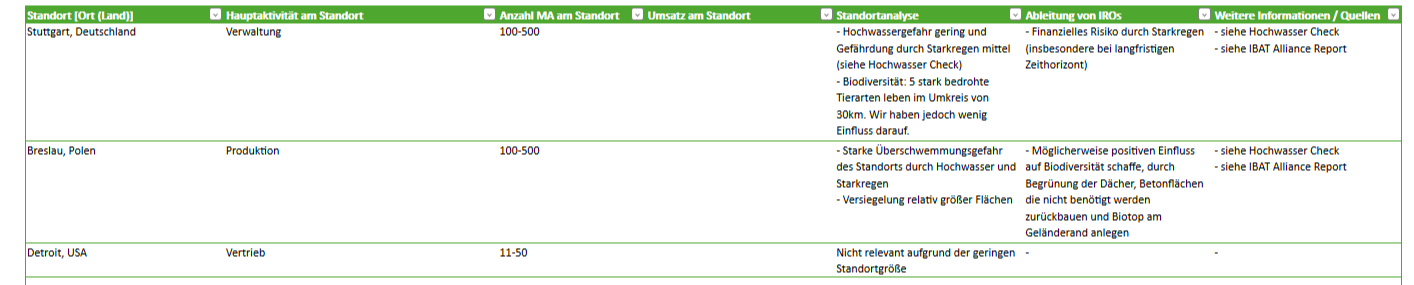
1.1.2 b) Overview of the geographical locations
Your company's geographical presence influences which sustainability issues are particularly relevant. Examine the locations of your production and distribution sites to identify regional differences in social and environmental challenges. Record the IROs derived from them.
1.1.3 Mapping of business relationships and the upstream and downstream value chain
A holistic materiality analysis requires a deep understanding of the entire value chain, both upstream and downstream. Start by analysing your suppliers and customers. The most important factors here are:
- Environmental and social risks along the supply chain
- The sustainability requirements you place on your suppliers
1.2 Consider further contextual information
1.2.1 Analysis of the legal and regulatory framework conditions
List which regulatory requirements and legal provisions apply to your company. These include environmental protection laws, labour laws, data protection regulations, industry standards and compliance requirements.

Step 2: Stakeholder analysis
Although not required by the ESRS, stakeholder engagement plays a central role in the materiality analysis, as stakeholder interests and expectations are crucial in determining which topics are considered material. In this step, identify all relevant stakeholder groups and analyse their expectations and influence on your company.
Even if formal stakeholder engagement is not mandatory under ESRS, involving key stakeholders early in the process strengthens the credibility of your materiality assessment and makes it easier to validate results with management.
Step 3: Identify IROs
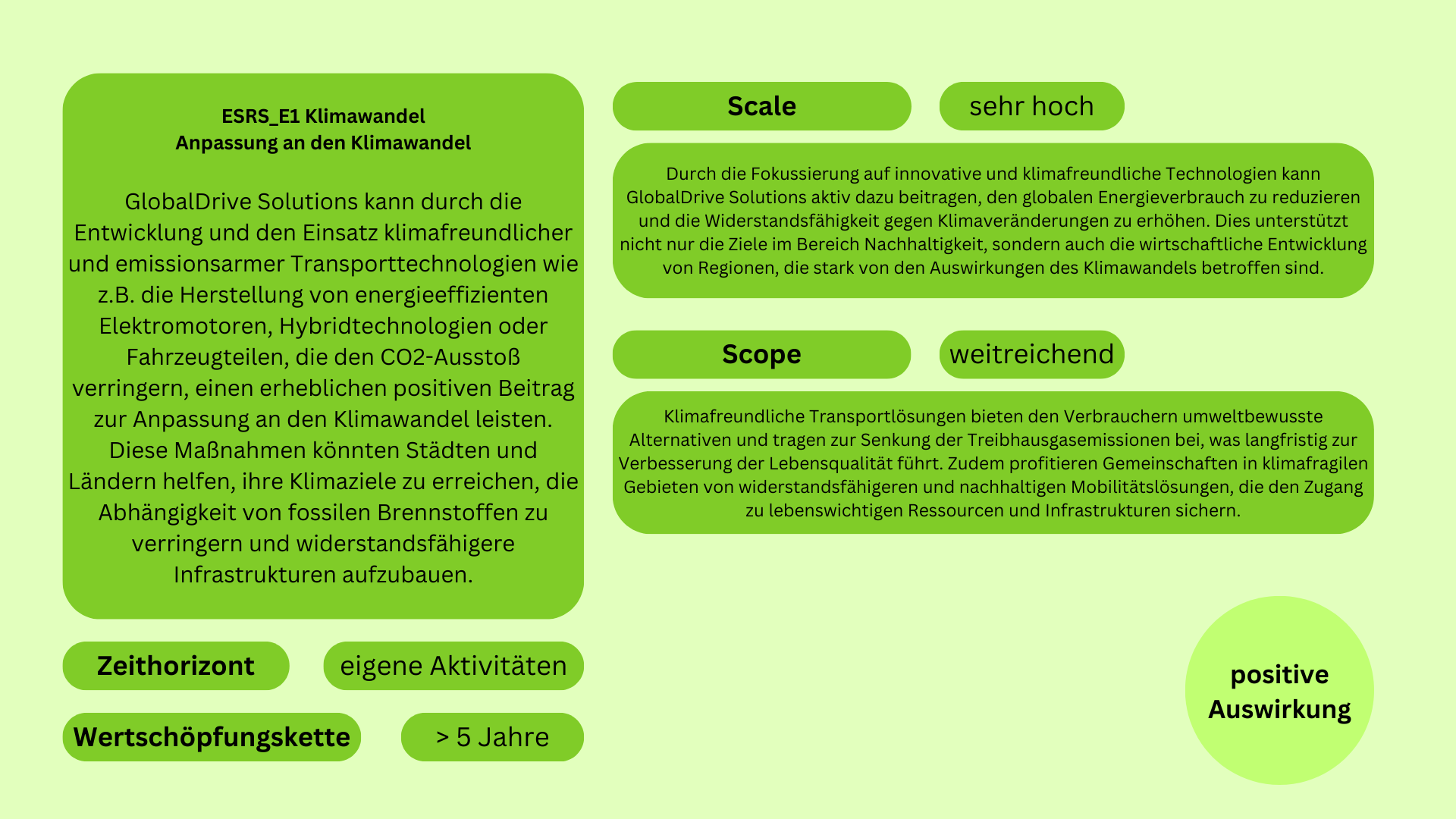
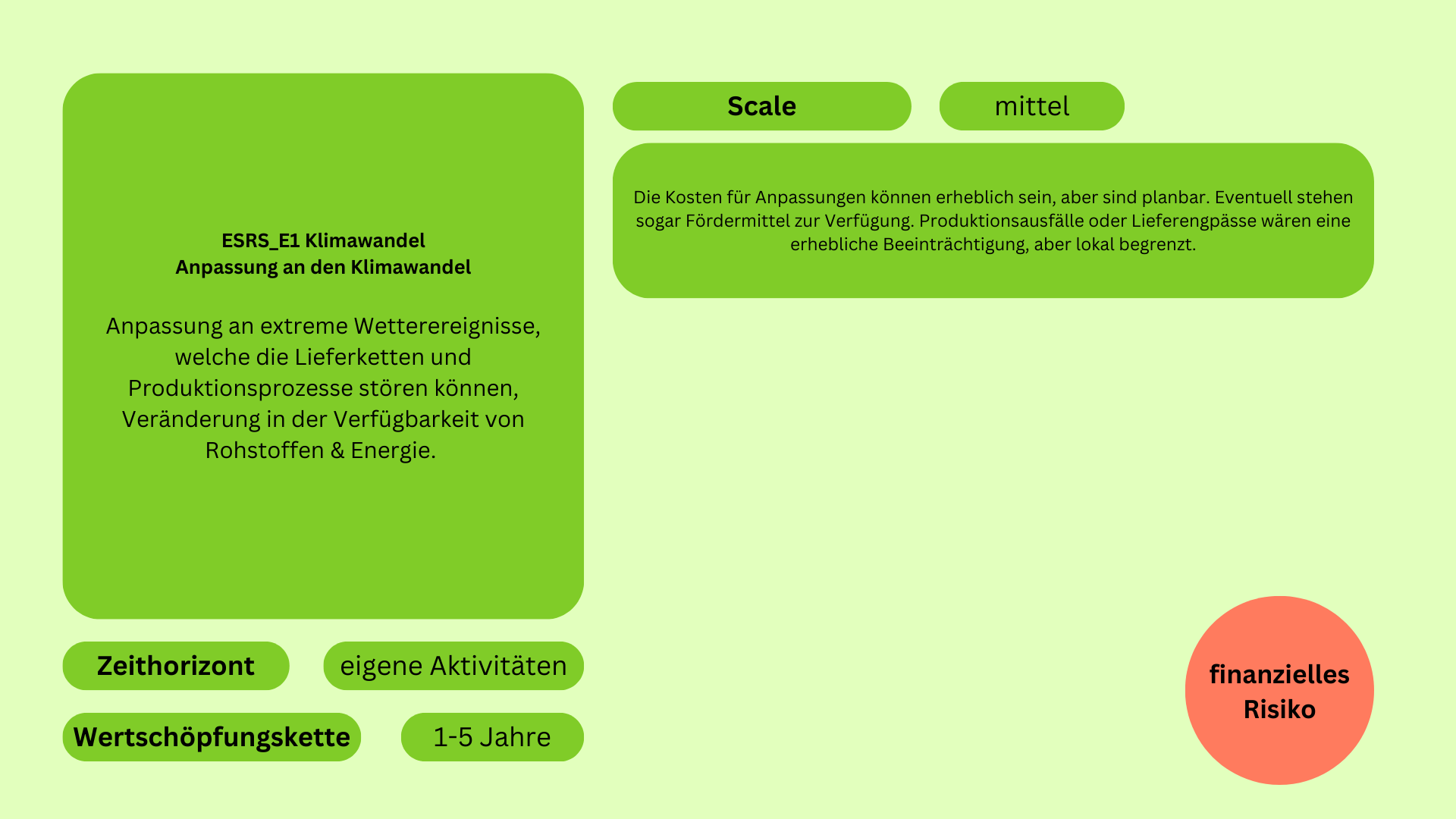
In the third step, identify the impacts, risks and opportunities (IROs) associated with the material topics. This process helps you understand how your company and its stakeholders are affected by or could benefit from certain topics. The template's Filling Guide contains over 40 example IROs to guide you.
Step 4: Materiality matrix
Once the IROs have been entered, the template visualises the materiality matrix automatically. This visualisation is useful for:
- Final validation of the material topics
- Presenting results to management
- Publication in the sustainability report
Finally, management and ideally the Supervisory Board should validate the identified material topics. They are ultimately responsible for the annual report including the sustainability report and may carry personal liability.
A structured Excel tool that guides you step by step through the double materiality analysis and generates your materiality matrix automatically.
Frequently asked questions about the materiality analysis template
What is the double materiality analysis and why does it matter?
The double materiality analysis looks at sustainability topics from two angles. First, how does your company impact people and the environment (impact materiality)? Second, how do environmental and social factors create financial risks or opportunities for your company (financial materiality)? ESRS-based reporting requires both perspectives to be considered.
Who needs to carry out a double materiality analysis?
Companies subject to CSRD reporting obligations must complete a double materiality analysis. Since 18 March 2026, the Omnibus Directive has been in force: from financial year 2027, only companies with more than 1,000 employees and more than 450 million euros net turnover are required to report. Smaller companies can also use the process voluntarily to improve their sustainability management.
How does the Excel template generate the materiality matrix?
Once you have entered your IRO assessments in the template, the materiality matrix is generated automatically. No manual charting is required. The template calculates scores based on your inputs and places each topic on the matrix, making it straightforward to validate results with your management team.
Where can I find more guidance on using the template?
You can find detailed answers to common questions on the materiality analysis template FAQ page. The template itself also includes an integrated Filling Guide with over 40 example IROs to help you get started.