- EFRAG published the final VSME standard in December 2024, reducing reporting requirements from three to two modules.
- The mandatory double materiality analysis is no longer required under the VSME.
- Disclosure points dropped from 28 to 18, significantly cutting the administrative burden for SMEs.
- Since 24 September 2026, the VSME has been in force as the "VS (Voluntary Standard)" (Delegated Regulation (EU) 2026/1560), open to all companies not subject to mandatory CSRD reporting, not just SMEs.
- Voluntary VSME reporting can lower financing costs, strengthen market positioning and build stakeholder trust.
The voluntary reporting standard VSME was adopted by the EU Commission on 3 July 2026 as the VS (Voluntary Standard). It has been in force as Delegated Regulation (EU) 2026/1560 since 24 September 2026, is open to all companies not subject to mandatory CSRD reporting, and builds on the VSME in terms of content. This article still uses the former name VSME. Read what has changed in Final ESRS and VS Standard 2026.
The Corporate Sustainability Reporting Directive (CSRD) and the European Sustainability Reporting Standards (ESRS) have paved the way for more sustainable corporate reporting. A central component of this development is the VSME update (Voluntary Sustainability Reporting Standard for non-listed SMEs): the final EFRAG version, adapted following public consultation and published in December 2024. The VS adopted by the EU Commission on 3 July 2026 builds on it. What do these changes mean in concrete terms, what advantages does the VSME update bring, and for which companies is it relevant?
What is the VSME update and why is it important?
The VSME update is EFRAG's adaptation of the standard from a draft version to the final version published in December 2024. While the comprehensive requirements of the original ESRS (Set 1) with over 1,000 data points place numerous demands on companies to report on environmental, social and governance (ESG) aspects, the VSME is voluntary and requires only a fraction of those disclosures in order to minimize the administrative burden for SMEs.
The standard has been greatly simplified. These are the most important changes:
- Two modules instead of three: the PAT module has been removed, leaving the Basic and Comprehensive modules.
- Only 18 instead of 28 disclosure points to be reported.
- The double materiality analysis is not mandatory.
The most important changes at a glance
Two modules instead of three
One of the most noticeable changes: the previous VSME standard has been reduced from three to two modules. The previous Narrative Policies, Actions and Targets (PAT) module has been completely removed.
The two remaining modules are:
Basic Module
The Basic Module is the starting point for sustainability reporting by SMEs. It covers minimum disclosures on:
- Environment (energy consumption, greenhouse gas emissions, resource consumption)
- Social issues (employee conditions, health and safety)
- Business ethics (corruption incidents, compliance)
Comprehensive Module
The Comprehensive Module is aimed at SMEs that want or need to fulfill additional requirements, for example for investors, banks or larger business partners. It contains detailed disclosures on climate risks, GHG reduction targets and social indicators such as gender diversity in management.
With this new structure, the VSME standard is much clearer, less extensive and better adapted to the needs of SMEs.
Fewer disclosure points, materiality analysis no longer required
The new VSME standard eases the burden on smaller companies by eliminating the requirement for a double materiality analysis. At the same time, many items are deleted and the standard is reduced from 28 to 18 disclosure points.
Flexibility for Scope 3 emissions
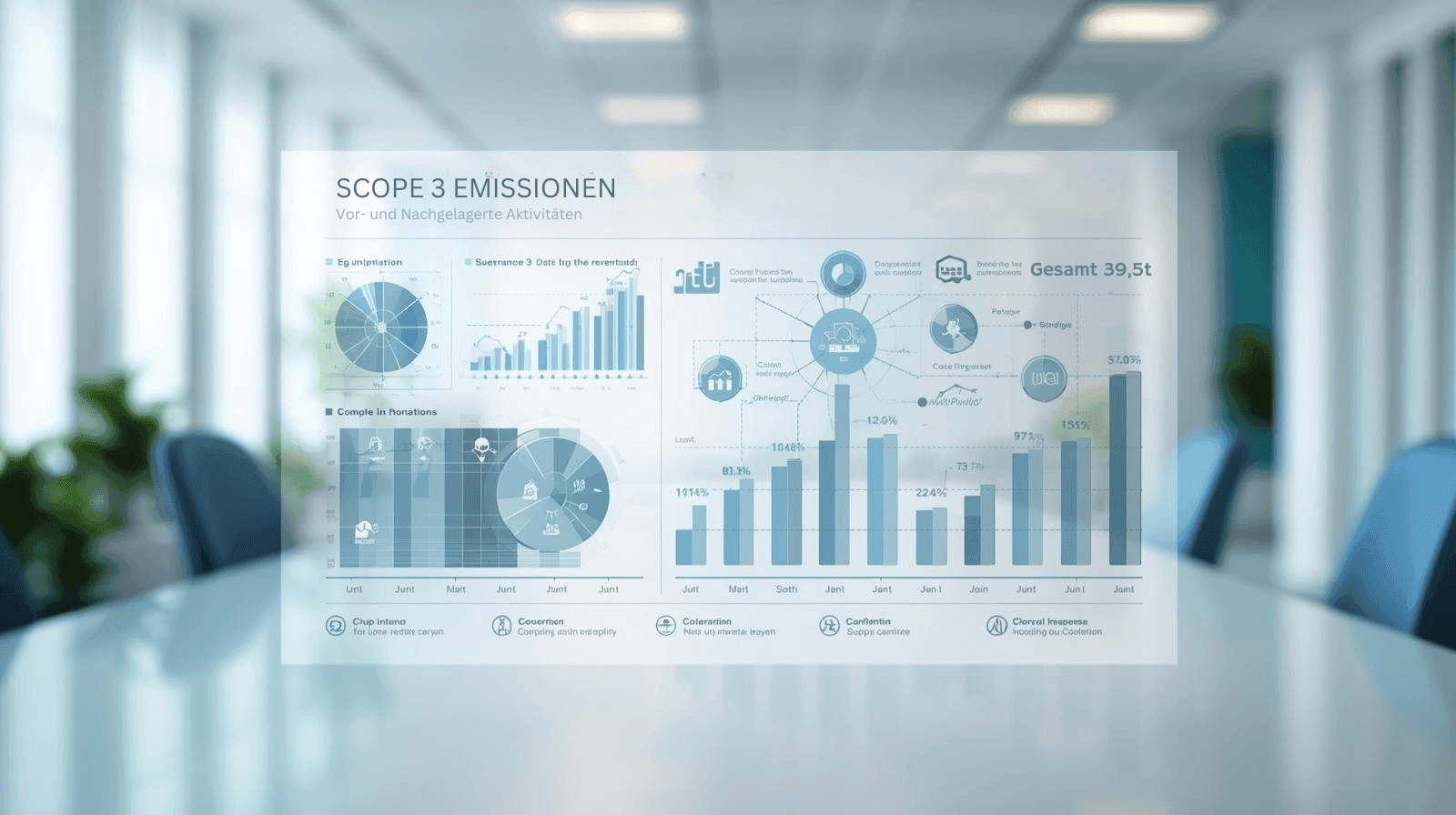
Another highlight: the disclosure of Scope 3 emissions (indirect emissions from the value chain) is voluntary. Companies that collect their Scope 3 data can create additional transparency and enhance their sustainability strategy.
Costs and benefits of the new VSME standard
EFRAG has published a comprehensive study with a cost-benefit analysis of the new VSME standard. Here are the key findings:
Increased competitiveness
SMEs that use the VSME standard can strengthen their market position through greater transparency. This builds trust with business partners and investors. Companies active in "green markets" or offering sustainable products benefit especially from the improved perception.
Financial benefits
ESG reporting gives SMEs access to more sustainable sources of financing. According to the study, interest rate advantages of between 10 and 30 basis points on loans can be achieved by applying the VSME standard. EFRAG's calculations suggest the financial benefits could reach a total of 580 million euros by 2028.
Improved internal organisation
Applying the VSME standard helps companies to improve their internal processes and management practices. Companies can identify opportunities to optimise resource allocation, reduce risk and capitalise on emerging sustainability trends. Regular ESG performance analysis promotes strategic decision-making and strengthens internal collaboration.
Lower entry costs
The revision has significantly reduced compliance costs. Eliminating the materiality analysis saves companies between 6,000 and 20,000 euros. In addition, the use of digital platforms facilitates implementation and reduces the time required by 10 to 30%.
A structured Word template for your VS sustainability report. Pre-written sections, tables and a step-by-step guide so you only need to fill in your own data.
What do the changes mean for SMEs?
The revised VSME standard makes it easier for small and medium-sized companies to get started with sustainability reporting. Thanks to the new two-module structure and the removal of the PAT module, effort and costs are significantly reduced. There is still enough flexibility to adapt the standard to individual requirements.
Recommendations for companies
Germany has not yet adopted its national CSRD transposition law, and there is no fixed date for its adoption (as of September 2026). This uncertainty should not be a reason to delay. Making so-called "no-regret moves" now is worthwhile.
No-regret moves are activities that provide a benefit to the company regardless of the final regulatory outcome. For most companies, these include carrying out a materiality analysis and preparing a VSME sustainability report.
Here are the four most useful steps you can take now:
- Revise your ESG strategy. Align your sustainability strategy with the new materiality criteria and reporting requirements.
- Use digital tools. With our updated sustainability report template for SMEs, you can implement the new VSME standard with less effort. The Word template provides a pre-structured report that you only need to fill in with your data.
- Start voluntary reporting. Smaller companies that are not directly covered by the CSRD can benefit from voluntary reporting to create transparency towards stakeholders or to meet the requirements of customers or suppliers.
- Follow regular updates. Keep up to date with further changes to the ESRS and CSRD. We regularly report on relevant changes in our bi-weekly newsletter.
Frequently asked questions about the VSME update
Who is the VSME standard for?
The VSME standard is designed for non-listed SMEs that want to report on sustainability voluntarily. Since 24 September 2026, it has been in force as the "VS (Voluntary Standard)" (Delegated Regulation (EU) 2026/1560), open to all companies not subject to mandatory CSRD reporting. Value-chain partners of CSRD-obligated companies also benefit: from financial year 2027, companies subject to the CSRD may not demand information beyond what the VS covers from partners with up to 1,000 employees.
Is the double materiality analysis mandatory under the VSME?
No. The final VSME standard (December 2024) explicitly removes the mandatory double materiality analysis. This was one of the biggest simplifications compared to the earlier draft and saves SMEs between 6,000 and 20,000 euros compared to a full materiality process.
What are the two VSME modules and which one should I use?
The Basic Module covers the minimum disclosures on environment, social issues and business ethics. It is the right starting point for most companies. The Comprehensive Module adds detailed disclosures on climate risks, GHG reduction targets and social indicators, and is suited for companies that need to meet investor, bank or large-customer requirements.
Do I need to report Scope 3 emissions under the VSME?
No. Scope 3 emissions reporting is voluntary under the VSME standard. Companies that already collect this data can include it to create additional transparency and strengthen their sustainability positioning, but it is not required.